Impact Is Understood Through Context

I do not treat experience as a list of names or separate numbers. Behind every result, there is a different context, a specific role, and decisions that had a direct effect on the path of the business.

This page brings together selected examples of businesses I helped found, operate, or develop, along with experiences where I dealt with crises, unorganized data, and decisions that needed a full understanding of the picture before moving.

Each experience is presented through four elements:

Context — My Role — What Was Worked On — Impact

Selected Impact Stories

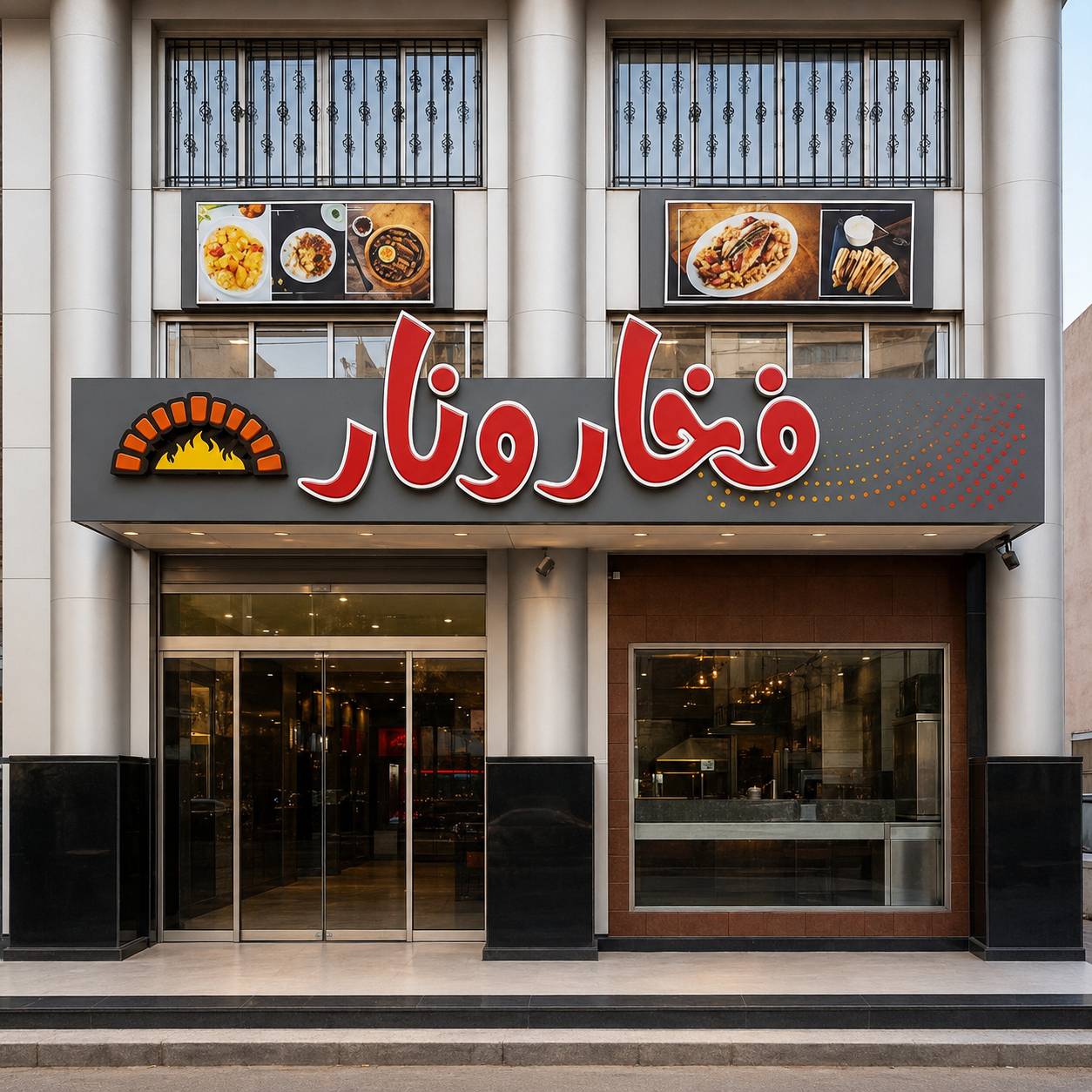
فخار ونار
Restaurants and Hospitality

Fakhar w Nar

From an idea to a business operating at scale

Period2017–2021
LocationGaza Strip
Type of ExperienceFounding, operations, and growth

Context

The business started from the ground up in a highly competitive market. The challenge went beyond offering a good product; it was about building operations capable of handling increasing demand, maintaining quality, and managing the team, suppliers, and customers at the same time.

My Role

I co-founded and managed the business, taking on responsibilities connected to operations, pricing, purchasing, supply, marketing, team management, quality, and product development.

What Was Worked On

  • Building and developing the operating method as the business grew.
  • Reconsidering some production methods that were slowing down speed and efficiency.
  • Developing products and expanding into new sales lines.
  • Improving supply and negotiating with suppliers.
  • Managing operations during high-pressure seasons.
  • Operating the business 24/7 at one stage.

Impact

  • Built a team of more than 40 people.
  • Reached around 500 transactions or orders per day in some periods.
  • Monthly sales reached around $400K at peak performance.
  • A direct practical experience in the relationship between growth, operations, quality, and execution capacity.
+40Team members
500Orders or transactions per day
400K-$Monthly sales at peak performance
24/7Continuous operation at one stage

A direct practical experience in the relationship between growth, operations, quality, and execution capacity.


Additional Experiences Within the Journey

Trade and Import

Carried out more than 10 trade operations between several markets. This stage contributed to building my understanding of the market, capital management, negotiation, supply, and the risks connected to cross-border trade.

Training and Community Participation

Delivered more than 40 training sessions within programs related to participation and community accountability, reaching more than 1,000 young men and women.
I also delivered talks and sessions connected to building businesses, mistakes in launching restaurants, management, and community work.

Emerging Technology and Service Projects

I participated, at different levels, in founding or developing projects such as:

  • Nwah Tech
  • Khotoot
  • WINGS.
  • PEACE PAY.
  • Sabayaa Embroidery
  • START Workspace.

What Is the Common Thread?

The sectors and markets were different, but the pattern of work kept repeating:

– An idea that needed to be built.
– A business that needed clearer operations.
– Scattered numbers that needed organization.
– Growth that needed control.
– A crisis that needed priorities to be rearranged.
– And a decision that needed the full picture before execution.

These experiences shaped the way I currently design businesses, develop existing companies, and work in complex conditions.

Projects I have worked on founding, developing, and managing at the executive level.

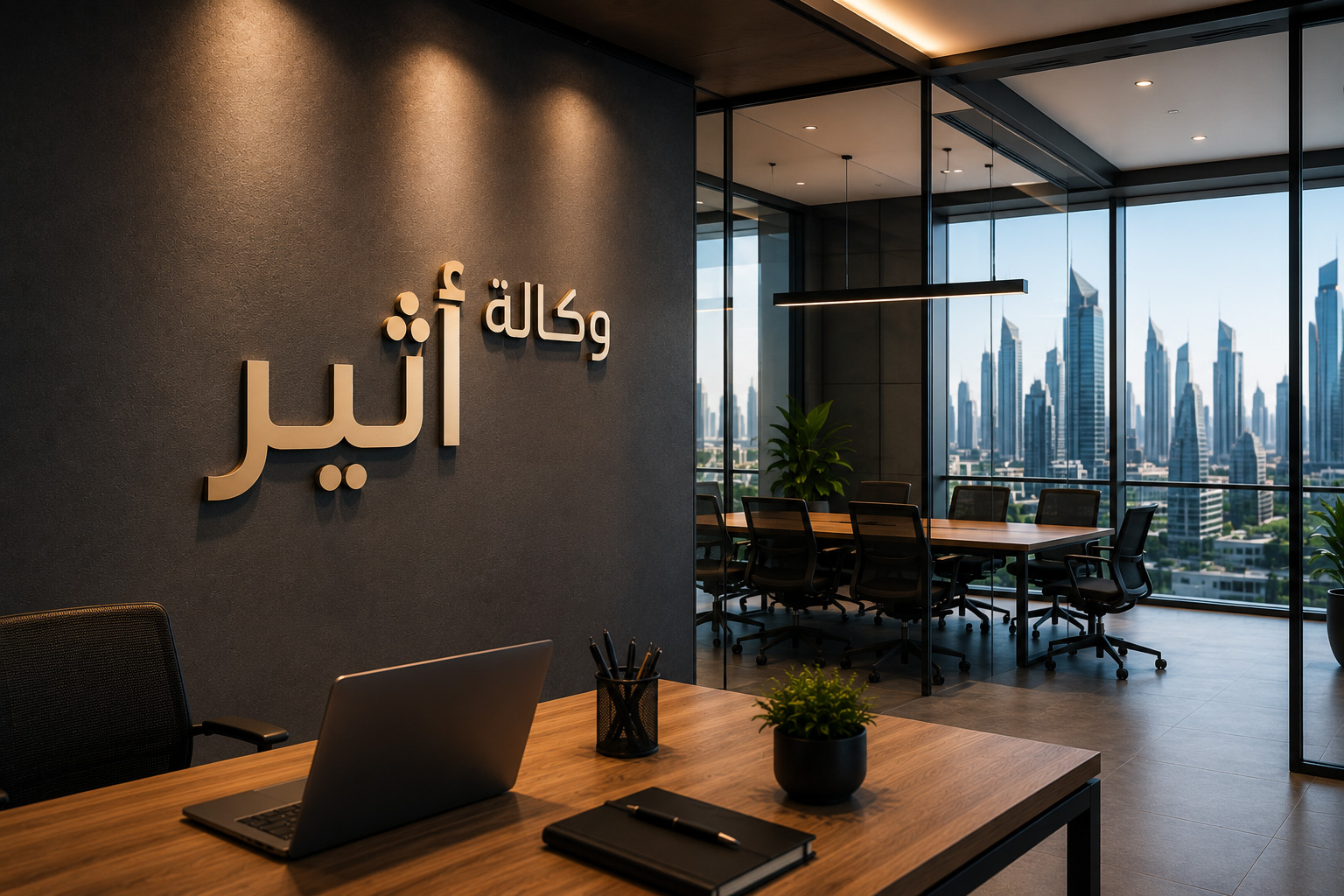
Atheer Agency

Atheer started from a small office and only two partners. From the beginning, I did not want to build an agency that sells ready-made advertising campaigns. I wanted to build a model that starts before advertising, with diagnosis: Is the problem in the product? The pricing? The message? The positioning? Or is the client not ready yet to benefit from marketing in the first place?

I worked on building the company from the inside, from the business model, services, and sales approach, to hiring, operations, and account management. Over time, Atheer grew from a small idea into an agency serving more than 50 clients in Palestine and the Gulf, and managing up to 27 clients at the same time.

The most important decision in the experience was to start small and prove the model before raising the cost. After achieving profitability in the first 3 months, we started expanding the team, services, and operations more clearly. We also developed a diagnosis method before sales, so we would not offer a marketing service before understanding the real business problem.

The biggest challenge was not only acquiring clients, but maintaining service quality during fast growth. This is where important lessons appeared: every team has a production capacity that must be respected, the founder cannot stay inside every detail forever, and not every client is right for the company, even if they can pay.

Atheer stopped because of the war on Gaza, but it remained one of my most important experiences in building companies. The experience taught me that real growth is not in the number of clients, but in the company’s ability to grow without losing its system, quality, or clarity.

Khotoot Creative Production

I entered Khotoot from the idea stage, before it became an operating company. In the beginning, the requirement was not only to choose a name or define services, but to build a clear model: What will the company sell? To whom? How will it price? And how will it reach the customer in a measurable way?

I worked with the management on designing the business model, defining the core services, setting the pricing policy, and building a customer acquisition approach mainly based on Google Ads. An important part of the experience was building an operating model that depends on freelancers without losing the company’s ability to control quality and delivery.

The company was able to reach profitability from the first month and serve more than 100 clients, while building a team and supplier network that supports daily operations. But the most important value was not only in the speed of the start. It was in reducing trial and error, and reviewing decisions before execution, especially in pricing and customer acquisition channels.

One of the most important lessons in this experience is that a successful marketing decision should not be changed just for the sake of trying something new. If a sales channel is working, improvement should be based on clear data, not on excitement for a new campaign.

I still work with Khotoot as a management consultant, and I participate in reviewing operational, pricing, and growth decisions with every new stage of the company’s development.

Nwah Tech

Nwah Tech started from a simple idea: digital transformation is not about selling a new system or application. It is a way to help small and medium-sized businesses work more efficiently and make clearer decisions.

I worked on building the company from the founding stage, from designing the business model and developing the services, to building the company strategy, studying the market, developing partnerships, and preparing the launch plan in the Omani market.

The main challenge was to present technology as an administrative and commercial solution, not as a technical product disconnected from the customer’s actual need. That is why the focus was first on understanding how each business works, then defining the digital solution that serves its real objective: improving operations, reducing waste, simplifying follow-up, or supporting growth.

Nwah Tech is still in the launch and market presence-building stage, with early work starting and internal services and systems under development. I continue to lead this stage and build a model that connects technology to business results, not to the superficial use of digital tools.

PEACE PAY

I entered PEACE PAY at a sensitive stage: launch and pilot operation. At this stage, the risk is not only that the product does not work, but that the project expands before understanding the market, targets the wrong segment, or reads early feedback too quickly.

I worked with the team on reviewing the commercial side of the project, from the targeting plan and defining the first customer segments, to market entry strategy, and discussing the business model and revenue mechanisms. The main focus was to test assumptions before turning them into expansion decisions.

In FinTech, building trust is just as important as building the product. That is why a large part of my role was helping the team distinguish between different questions: Is the problem in the product? The message? The target segment? Or the way we reach the customer?

The current stage is still a stage of testing and learning. We review early results, arrange priorities, and try to reduce the cost of trial and error before moving into wider growth.

I still work with the team as a business development consultant, following up with them on targeting, launch, and growth decisions step by step.

SEED

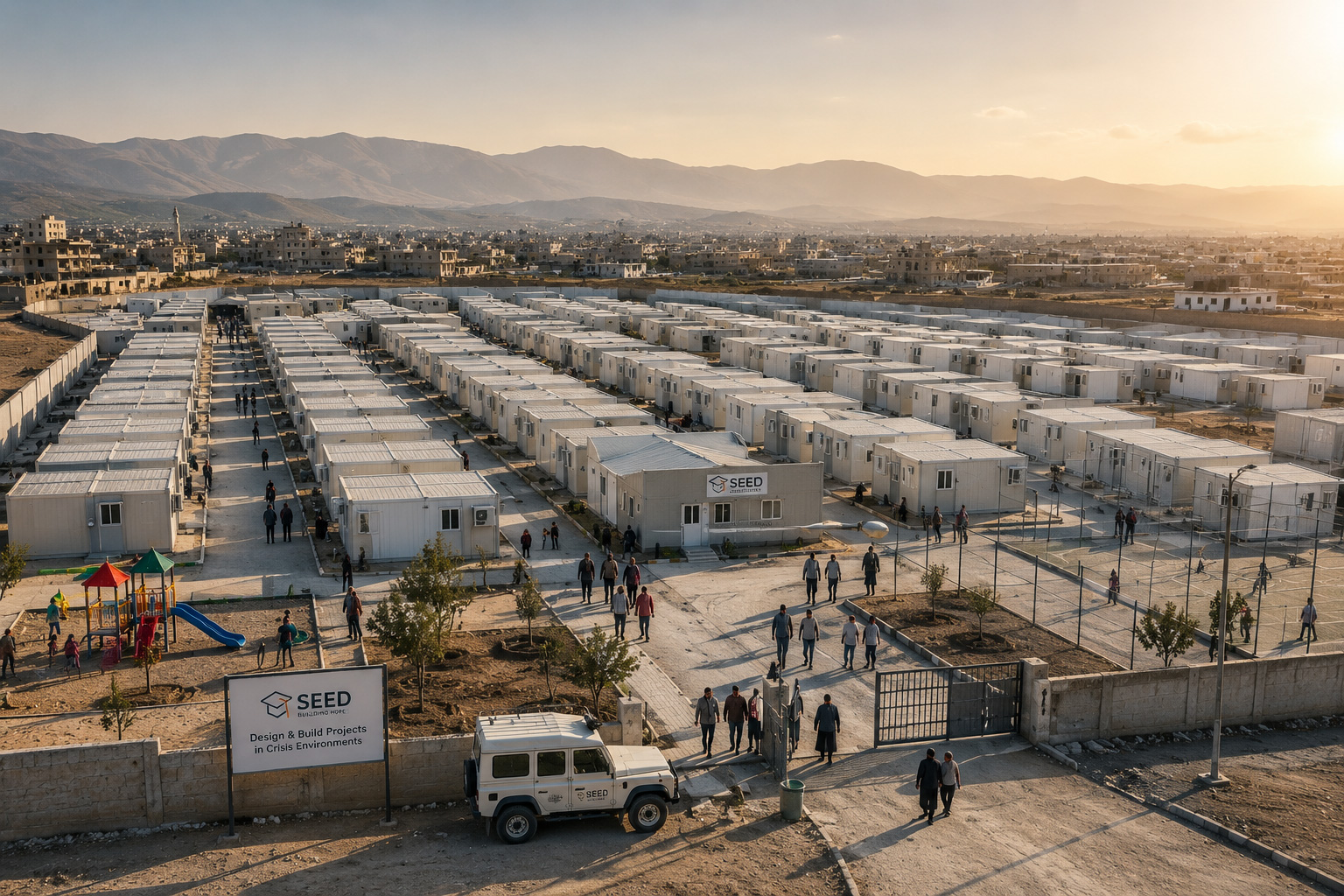
I joined SEED during the war on Gaza, starting with a monitoring assignment to ensure the quality of humanitarian project implementation. Over time, my role developed from following up on execution to participating in project design, proposal writing, program development, and supervising the implementation of humanitarian and development initiatives.

In this experience, the biggest challenge was that humanitarian work cannot afford randomness, even in the most difficult circumstances. Needs change quickly, resources are limited, and decisions must consider the donor, the team, the field reality, and the dignity of the beneficiary at the same time.

I worked on developing ideas and proposals in education, livelihoods, health, and digital transformation. My constant focus was to avoid keeping interventions as relief-only whenever possible, and instead turn them into something more sustainable, such as supporting work and education opportunities, and developing projects that serve people beyond the immediate moment of crisis.

Among the important experiences inside SEED was developing the idea of a coworking space in Gaza during the war to support freelancers and students, contributing to computer distribution programs, and designing projects connected to supporting doctors, community kitchens, prosthetic limbs, and vocational training.

This experience taught me that the quality of a humanitarian project does not start at execution. It starts with the quality of the idea itself. And the dignity of the beneficiary is not a separate humanitarian detail from management; it is a core part of project quality.

I still work within SEED in program and project development, focusing on designing initiatives, writing proposals, supervising execution, and improving the quality of humanitarian and development programs.

Qurani Tech

I entered Qurani Tech from the idea stage, before it became an operating academy. In the beginning, the question was not only: how do we launch an online Quran learning platform? It was: how do we build an educational institution that can earn parents’ trust, maintain teaching quality, and remain financially and operationally sustainable?

I worked with the team on the business model, the administrative and financial structure, the student journey, pricing policy, quality standards, and selecting teachers and supervisors. It was important not to treat the project as only an educational platform, but as an institution that needs clear governance, organized operations, and a follow-up system that protects the quality of memorization and the learning experience.

One of the key decisions in this experience was that I refused to launch the project with a small capital that was not enough to build a stable institution, and recommended increasing the capital in a way that supports growth and continuity. It was also important to separate management from ownership, and to adopt a clear for-profit model instead of mixing the commercial activity with charitable initiatives.

In marketing, direct advertising was not the strongest option. Because a parent’s decision to choose Quran education depends on trust more than on an advertising offer, we focused on referrals, parent experiences, and collaborations with influencers instead of relying completely on paid campaigns.

Today, Qurani Tech serves students from more than 17 countries, with more than 500 current and former students, and more than 300 active students. For me, this experience confirms that sustainability does not start by reducing the cost of founding, but by building the right model from the beginning.

I still work with the team as a consultant on administrative and strategic decisions, and participate in developing the model, operations, and quality with every new stage of the academy’s growth.

WINGS Coworking Space

I entered WINGS at the pre-opening stage, after the location had been chosen and before the place became a coworking space ready for the market. At this stage, the goal was not for the project to be just a nice place with desks and internet, but a clear experience where freelancers, students, and business owners could understand why they would choose it.

I worked on the name, the initial identity, pricing policy, opening offers, the marketing plan, and some of the administrative and operational aspects the project needed before launch. Part of the work was also connected to preparing the project for the market through licensing, organizational structure, and cooperation with marketing providers.

The most important decision in the experience was to start by building trust before direct selling. That is why it was better for people to enter the place and experience it themselves, through a free day for freelancers, instead of asking them to subscribe to a new space whose value they had not tested yet.

The main challenge was launching the coworking space concept in a relatively limited market, while also balancing the desire for quick revenue with the need to build a strong brand and experience from the beginning.

This experience confirmed to me that new projects do not need loud marketing as much as they need an experience that makes the customer understand the value for themselves. It also confirmed that consulting does not create real impact unless there is genuine conviction to apply it, not just listen to it.

Sabayaa Embroidery

I entered Sabayaa at a stage different from founding. The brand already existed, with a clear story and identity, operating in an important space that brings together product, Palestinian heritage, and women’s economic empowerment. But the challenge was that having a story was not enough on its own if sales were not moving as they should.

My first work with the project was to pause before suggesting any ready-made solutions. I started with diagnosis: How does the current business model work? Where does the customer journey break down? What changed in buying behavior? Is the problem in the product, pricing, message, channels, or in the way the value is presented to the customer?

I worked with the management on analyzing commercial performance, reviewing the customer journey, collecting feedback, and understanding the reasons behind the drop in sales before building the development plan. Because the decision at this stage should not simply be “let’s run a campaign.” We first need to define what needs to change inside the model itself.

For me, Sabayaa is an important experience because it reminds me that mission-driven projects also need strong commercial management. Identity gives the project meaning, but growth needs a clear offer, customer understanding, pricing, and sales channels that serve the story instead of leaving it trapped in sympathy or admiration.

I still work with Sabayaa in the diagnosis and development planning stage, with the goal of turning the strength of the identity and product into a clearer and more sustainable growth model.

Fakhar w Nar

Fakhar w Nar started as a Palestinian restaurant specialized in oriental food, but for me it was never just a restaurant. It was the experience where I learned management from inside real operations: kitchen pressure, pricing decisions, team management, product quality, suppliers, expansion, and crises.

From day one, I was responsible for building and leading the project from the inside. I worked on the business model, identity, daily operations, human resources, quality, marketing, pricing, supply chain, and product development. Over time, the project grew from a new restaurant into one of the most recognized and best-selling restaurants in Gaza.

We reached more than 500 sales transactions per day, monthly sales exceeded one million shekels during Ramadan for more than one season, and I managed a team of up to 38 employees. We also expanded from one branch to two, then made the decision to merge operations again when maintaining quality became more important than the appearance of expansion itself.

One of the most important decisions was to stop relying on clay ovens, even though they were connected to the identity of the project, and replace them with modern ovens that ensured more consistent quality. The decision was not easy, but it taught me that competitive advantage does not mean holding on to the old form if it harms operations.

During COVID-19, we redesigned the business model completely and shifted into supplying meals to government quarantine centers, with daily menus that balanced quality, cost, and variety. During Ramadan, we executed one of the largest meal supply contracts in Gaza, preparing around 3,000 meals per day alongside the restaurant’s regular operations.

This experience taught me that quality is not individual effort; it is a system. Expansion does not succeed if it moves faster than operational capacity. Cash flow can sometimes be more important than paper profits. Most importantly, crises do not wait for a company to be ready; they reveal how quickly it can adapt.

Fakhar w Nar ended because of direct bombing during the 2021 war, but it remained one of the most important experiences that shaped the way I think and manage. From it, I learned that any successful business is not built only on a good product, but on a system that protects the product, the team, and the decision under pressure.

Not Every Experience Can Be Summarized in a Number

Some results appear in sales or number of clients, and others appear in building a business from scratch, organizing a complex file, or making a better decision at a sensitive moment.

Contact Form Demo

Education

2018

Master in Design

New York University

2014

Bachelor of Arts

University of London

2011

Artist of College

University of Sydney

Scroll to Top